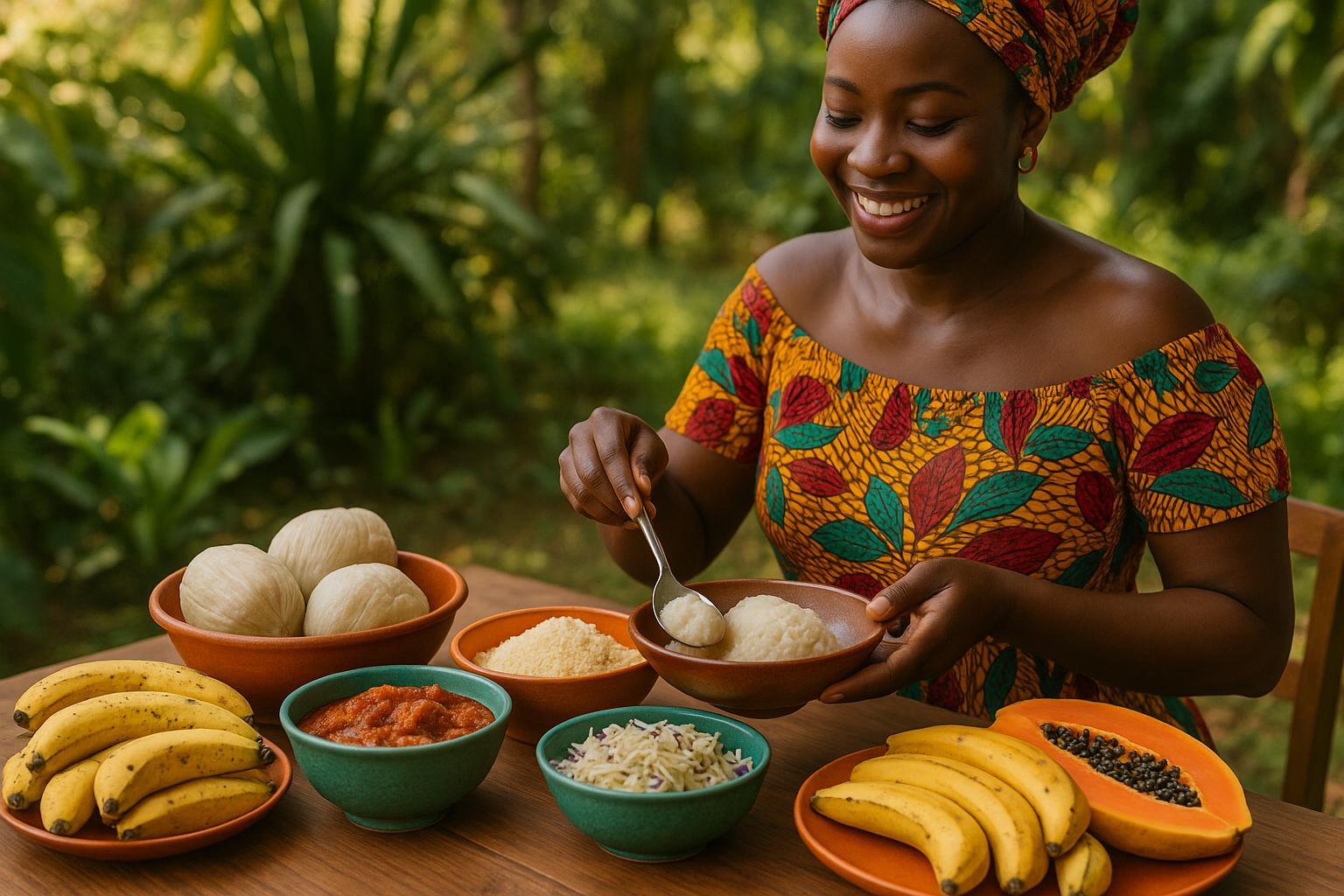
Probiotics and prebiotics are essential for gut health, but they serve different purposes. Here’s the quick breakdown:
- Probiotics: These are live “good bacteria” found in fermented foods like kenkey, nunu, and koko. They help balance gut bacteria, improve digestion, and support your immune system.
- Prebiotics: These are plant fibres that feed probiotics. Foods like unripe plantains, tiger nuts (atadwe), and kontomire provide prebiotics to help probiotics thrive.
Quick Comparison
| Feature | Probiotics | Prebiotics |
|---|---|---|
| What They Are | Live beneficial bacteria | Non-digestible plant fibres |
| Role | Add good bacteria to your gut | Feed and support the growth of probiotics |
| Sources | Kenkey, nunu, koko, brukina | Unripe plantain, tiger nuts, kontomire |
| Action | Immediate impact on gut balance | Long-term support for gut bacteria |
Key Food Pairings
Combine probiotics and prebiotics for better results:
- Kenkey with kontomire stew
- Koko with roasted unripe plantain
- Brukina with tiger nuts
These combinations are easy to include in your diet and help improve digestion, nutrient absorption, and immunity.
Basic Facts: Probiotics and Prebiotics
Probiotics: The Friendly Bacteria
Probiotics are live microorganisms that help keep your digestive system in check. These “good bacteria” naturally exist in the gut and are also found in fermented foods. Strains like Lactobacillus and Bifidobacterium are well-known for their role in breaking down food, producing essential vitamins, and defending against harmful microbes.
In Ghana, traditional fermented foods such as kenkey, fula, and wagashie are excellent sources of probiotics, making them not just delicious but also beneficial for gut health.
Prebiotics: The Food for Good Bacteria
Prebiotics are specific plant fibres that act as nourishment for probiotics. While humans can’t digest these fibres, the beneficial bacteria in the colon thrive on them. Prebiotics like inulin, fructooligosaccharides (FOS), and resistant starch are particularly important for promoting the growth of these bacteria.
| Prebiotic Type | Common Sources in Ghana |
|---|---|
| Inulin | Tiger nuts (atadwe), yam |
| Fructooligosaccharides (FOS) | Ripe plantain, cocoyam |
| Resistant Starch | Unripe plantain, gari |
When prebiotics reach the colon, they are broken down by bacteria to produce short-chain fatty acids (SCFAs). These SCFAs play a crucial role in maintaining gut health and boosting the immune system. Everyday staples like unripe plantain and tiger nuts provide a rich source of inulin and resistant starch, ensuring your gut bacteria stay well-fed and active.
Now, let’s dive into how probiotics and prebiotics differ in their roles and sources.
How Probiotics and Prebiotics Differ
How They Work
Probiotics are live microorganisms that directly support gut health, acting almost immediately. A good example is nunu, which delivers live beneficial bacteria to the digestive system.
On the other hand, prebiotics are non-digestible fibres that pass through the stomach and small intestine without being broken down. Once in the colon, they ferment into short-chain fatty acids (SCFAs), which help fortify the intestinal barrier. Unlike probiotics, which are sensitive to heat (for instance, koko loses its probiotic viability above 40°C), prebiotics are more stable. This is why steaming kontomire is a better option than boiling it.
To put it simply, probiotics provide the beneficial bacteria your gut needs, while prebiotics serve as the food that helps those bacteria thrive.
For example, probiotics in banku produce lactic acid, which lowers gut pH. Meanwhile, prebiotics in foods like cocoyam leaves are fermented in the colon to produce SCFAs.
Now, let’s explore some local foods that are natural sources of these components.
Where to Find Them
Traditional Ghanaian cuisine is a treasure trove of both probiotics and prebiotics. The table below highlights some common foods rich in these gut-friendly components:
| Food Type | Probiotic Sources | Prebiotic Sources |
|---|---|---|
| Daily Staples | Nunu (10⁸ CFU/g) | Kontomire (5.1g/100g fibre) |
| Condiments | Dawadawa | Tiger nuts (atadwe) |
| Porridges | Koko | Unripe plantain |
| Fermented Grains | Banku (10⁷ CFU/g) | Cocoyam (3.5g/100g) |
Many traditional dishes naturally combine probiotics and prebiotics. For instance, fura de nunu pairs probiotic-rich fermented milk (nunu) with prebiotic-packed millet. Similarly, the 48-hour fermentation process used in making aprapransa enhances both its probiotic content and prebiotic properties.
A study titled “Spontaneously fermented millet product as a natural probiotic treatment for diarrhea in young children: an intervention study in Northern Ghana” evaluated the effects of a fermented millet drink, rich in lactic acid bacteria, on children under five with diarrhea. The study found that children who received up to 300 ml of the fermented drink daily for five days experienced a significant reduction in diarrhoea duration and improved well-being compared to those who received standard treatment alone.
For best results, store probiotic-rich foods like dawadawa in traditional calabashes at room temperature. Prebiotic foods, such as dried kontomire, retain their properties for months when properly stored.
Effects on Gut Health
How Probiotics Help
Probiotics are like the friendly neighbours of your gut – they help keep the peace by balancing gut flora and improving digestion. These live microorganisms not only assist in breaking down nutrients but also help your body absorb them more effectively. They also play a role in maintaining the strength of your intestinal barrier, which is essential for overall gut health. One of the easiest ways to introduce probiotics into your diet is through local fermented foods. Adding these to your meals as part of a balanced diet can naturally boost the population of these helpful bacteria.
How Prebiotics Help
Think of prebiotics as the food that fuels the friendly bacteria in your gut. These are dietary fibres that reach the large intestine, where they are fermented, producing compounds that promote a healthier gut environment. Foods like leafy greens and properly prepared unripe plantains are rich in prebiotics and can help keep your gut flora in balance. Together with probiotics, they create a strong foundation for better digestion and gut health.
Ghanaian Foods to Try
Foods with Probiotics
Ghanaian dishes are not just flavourful; some also pack a punch when it comes to probiotics. Take koko, for instance – a fermented millet or corn porridge that’s a breakfast favourite across Accra and beyond. Sold by street vendors, it’s a warm, comforting meal with added gut health benefits.
Then there’s brukina, a refreshing drink made from fermented millet and milk. This drink undergoes a double fermentation process lasting 48–72 hours, which significantly boosts its Lactobacillus content.
And let’s not forget kenkey, a staple made from fermented corn dough. Fermented for 2–4 days, it’s been found to contain 10⁶–10⁸ CFU/g of lactic acid bacteria, according to research from the University of Ghana (2022). Dr. Reginald Adjetey Annan even points out that kenkey and koko are affordable and accessible sources of probiotics for many Ghanaians.
Foods with Prebiotics
Beyond probiotics, Ghanaian cuisine also offers an array of prebiotic-rich foods that help nourish good bacteria in the gut. These ingredients are everyday staples with impressive health benefits.
For instance, unripe plantains – whether roasted as boli or added to soups – are loaded with inulin, a type of prebiotic fibre. Kontomire (cocoyam leaves) is another excellent source, providing about 4.2 grams of fibre per 100-gram serving, as detailed in the Ghana Food Composition Table.
Yam and cassava are also worth mentioning. Their resistant starch content increases when they’re cooked and then cooled, making them great for gut health. And let’s not overlook garlic and onions, which are rich in inulin (9–16%) and help promote the growth of beneficial bacteria like Bifidobacterium.
Here’s a quick overview of some of these foods and their benefits:
| Food Type | Preparation Method | Beneficial Properties |
|---|---|---|
| Koko | Fermented 12–24 hours | Active probiotics from lactic acid bacteria |
| Brukina | Double fermentation (48–72 hours) | Enhanced Lactobacillus content |
| Kontomire | Steamed or added to stews | Approximately 4.2 g fibre per 100 g |
| Unripe Plantains | Roasted or boiled | High in inulin |
Adding these foods to your daily meals is a simple yet effective way to support a healthy gut microbiome, which plays a key role in overall digestive health.
Using Both Together
Food Combinations
Combining probiotic and prebiotic-rich Ghanaian foods is a natural way to support gut health. Many traditional dishes already bring these elements together seamlessly. For example, pairing kenkey with kontomire stew blends fermented corn with the prebiotic-rich cocoyam leaves. Another great option is enjoying koko with roasted unripe plantain – a wholesome breakfast that may promote a healthier gut.
| Probiotic Food | Prebiotic Partner | Serving Suggestion |
|---|---|---|
| Koko | Unripe plantain | Serve warm koko with sliced roasted plantain |
| Kenkey | Kontomire stew | Add garlic and onions to the stew for extra flavour and benefits |
| Brukina | Tiger nuts | Blend tiger nuts into brukina for a creamy twist |
| Fura | Cassava chips | Pair cooled cassava chips with fura for a satisfying snack |
These combinations not only enrich your diet but also maximise the digestive perks of probiotics and prebiotics.
Health Effects
When paired, probiotics and prebiotics work together to boost gut health. The prebiotics feed the beneficial bacteria, helping them thrive and enhancing their positive effects. This powerful combination can:
- Strengthen the gut’s natural protective barrier
- Enhance nutrient absorption from food
- Bolster the immune system
- Ease common digestive issues
Try to include at least one of these pairings in your daily meals. Start with familiar combinations, then explore other options to keep things interesting and nutritious.
Get Expert Help
If you’re looking for more personalised guidance, connecting with a nutrition expert can help you optimise your meals for better gut health. Balancing probiotics and prebiotics might feel tricky, especially if you have unique dietary needs. Through DrDoGood‘s healthcare platform, you can easily access qualified nutritionists and dieticians familiar with Ghanaian cuisine. These professionals can:
- Evaluate your current eating habits
- Design meal plans tailored to your preferences
- Suggest specific food pairings
- Track your progress over time
- Adjust recommendations based on how your body responds
For expert advice, book a virtual consultation through the DrDoGood app and take the first step towards a healthier diet.
Probiotics vs Prebiotics: What’s the Difference?
Summary
Getting to grips with probiotics and prebiotics can help you make smarter choices when it comes to Ghanaian foods that naturally offer both. Take kenkey, for example – it’s packed with live Lactobacillus cultures (2.5×10⁸ CFU/g) and cereal-based prebiotic fibres, making it an excellent choice for gut health.
Experts recommend consuming between 1–10 billion CFU of probiotics and about 10 g of prebiotics daily. Traditional food preparation methods play a big role here. Pairings like fermented millet and moringa leaves not only taste great but also amplify the prebiotic benefits.
For the best results, make traditional fermented foods a regular part of your diet. Daily consumption works wonders for your gut health. To keep these foods effective, store them at room temperature or slightly chilled. Pair them with prebiotic-rich sides like steamed cocoyam or roasted plantain for a balanced meal.
If you’re looking for tailored advice, healthcare providers on DrDoGood can guide you on optimising your gut health. By incorporating these ideas into your everyday meals, you can tap into the wisdom of Ghanaian traditions to support a healthier digestive system.
FAQs
What are the health benefits of including both probiotics and prebiotics in your diet?
Combining probiotics and prebiotics in your meals can do wonders for your digestive health by supporting a balanced gut microbiome. Probiotics are the live, friendly bacteria that help keep your gut in check, while prebiotics are the non-digestible fibres that feed these bacteria, helping them flourish. Together, they create a powerful duo that aids digestion, boosts nutrient absorption, and supports your immune system.
To get the best of both, include foods like yoghurt, kenkey, or fermented drinks for probiotics, and pair them with fibre-rich choices like bananas, onions, and garlic for prebiotics. Incorporating these into your daily diet can leave you feeling more energised and healthier overall.
What are some Ghanaian foods rich in probiotics and prebiotics, and how can I include them in my daily meals?
Probiotics and prebiotics are essential for keeping your digestive system in good working order. Probiotics are the friendly bacteria found in fermented foods, while prebiotics are fibres that nourish these bacteria. In Ghana, incorporating both into your meals is not just easy – it’s delicious too.
For probiotics, explore fermented foods like nkrakra (fermented maize porridge), wagashi (a soft fermented cheese), or homemade yoghurt. These foods can fit seamlessly into your diet as breakfast, snacks, or even side dishes. On the other hand, prebiotics come from fibre-packed foods such as ripe plantains, cassava, cocoyam, and okra. Traditional dishes like ampesi with plantains or banku paired with okro stew are perfect examples of meals that naturally include prebiotics.
By blending these probiotic and prebiotic-rich foods, you’ll not only support your gut health but also savour the rich, vibrant flavours of Ghanaian cuisine. Strive for variety and balance in your meals to maximise the benefits.
How can I store probiotic and prebiotic foods to keep them effective?
To keep probiotic foods working as they should, store them in a cool place, like a refrigerator. Heat can destroy the live bacteria that make them beneficial. For instance, yoghurt, kimchi, and kefir need to stay chilled to maintain their potency. Keep them away from direct sunlight or high temperatures to avoid reducing their effectiveness.
On the other hand, prebiotic foods – such as garlic, onions, bananas, and oats – are more resilient and can be kept at room temperature. Just make sure they’re stored in a dry, well-ventilated area to prevent them from spoiling.
Always check the packaging for specific storage guidelines. Storing these foods properly not only helps maintain their quality but also ensures they continue to support your digestive health.